
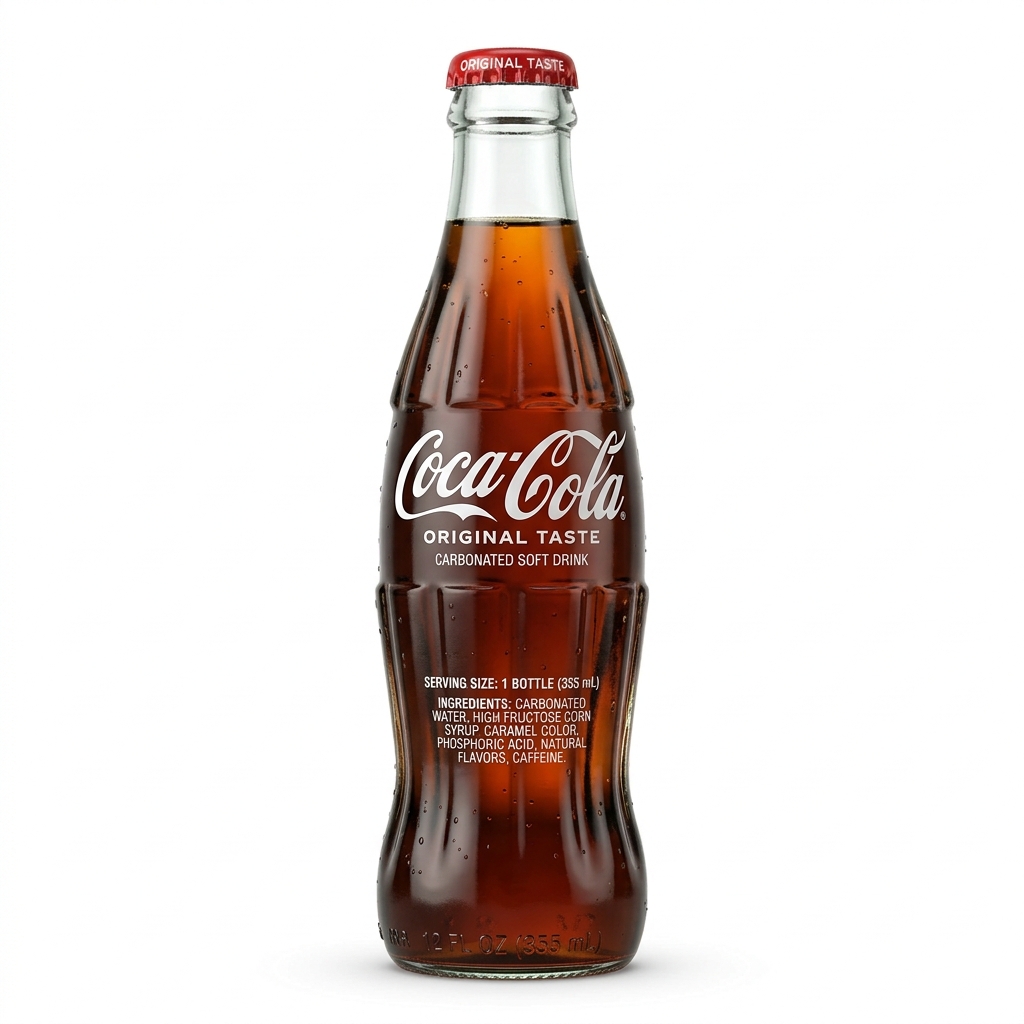
Coca-Cola Ingredients
What’s Inside Every Product
Coca-Cola is a globally recognized carbonated soft drink formulated primarily for refreshment. Its signature taste and appearance are created by a blend of carbonated water, high fructose corn syrup, caramel color, phosphoric acid, natural flavors, and caffeine. Together, these ingredients deliver the beverage's characteristic effervescence, deep brown color, sweet and tart flavor profile, and mild stimulating effect.
While the United States formulation relies on high fructose corn syrup, versions in many other countries use sucrose as the primary sweetener. This page provides a detailed breakdown of Coca-Cola's ingredient list, specific ingredient functions, formula structure, notable characteristics, safety considerations, and frequently asked questions.
Complete Ingredient List
High Fructose Corn Syrup
Caramel Color
Phosphoric Acid
Natural Flavors
Caffeine
Note: Ingredients vary globally; the US version uses High Fructose Corn Syrup, while many other countries use Sucrose (Sugar).
Quick Facts
| Brand | Coca-Cola |
| Category | Beverage |
| Product Type | Carbonated Soft Drink |
| Known For | Iconic sweet cola flavor and effervescence |
| Key Ingredient Groups | Carbonated Water, Sweeteners, Acidulants, Colorants, Natural Flavors |
| Primary Use | Refreshment |
Ingredient Function Breakdown
| Ingredient | Function in the Product |
|---|---|
| Carbonated Water | Liquid base and effervescence |
| High Fructose Corn Syrup | Primary sweetener |
| Caramel Color | Provides the signature dark brown color |
| Phosphoric Acid | Adds tartness and acts as a preservative |
| Natural Flavors | Proprietary blend of plant extracts for the unique cola taste |
| Caffeine | Provides a mild stimulating effect and bitter flavor note |
Product Identity
| Brand | Coca-Cola |
| Manufacturer | The Coca-Cola Company |
| Country of Origin | United States |
| Introduced | 1886 |
| Contains Caffeine | Yes |
| Product Family | Coca-Cola Original Taste |
Product Classification
| Market Category | Non-Alcoholic Beverage |
| Primary Function | Hydration and Refreshment |
| Typical Format | Liquid (Carbonated) |
| Consumer Segment | General Population |
| Comparable Product Group | Cola-Flavored Carbonated Soft Drinks |
Product Background
Introduced in 1886 by pharmacist John Stith Pemberton in Atlanta, Georgia, Coca-Cola is the flagship carbonated soft drink of The Coca-Cola Company. Initially formulated as a soda fountain beverage, the brand experienced rapid growth under the business leadership of Asa Griggs Candler, who secured the formula and rights in the late 1880s. Through aggressive marketing and innovative bottling agreements, the beverage transitioned from a regional novelty into a globally recognized consumer product, shaping the modern soft drink industry.
Today, Coca-Cola stands as one of the most valuable and universally recognized brands in the world, distributed in over 200 countries and territories. Its market role extends beyond simple refreshment, serving as a global cultural icon and a benchmark for international supply chain management and franchise bottling systems. The product's enduring prominence is sustained by its historic advertising campaigns, iconic visual identity, and its position as a staple in both retail and food service sectors worldwide.
Product Overview
Coca-Cola is a globally recognized carbonated soft drink that serves as the flagship product of The Coca-Cola Company and the definitive benchmark for the cola beverage category. As one of the most widely distributed consumer goods in history, it occupies a dominant position in the global beverage market. Consumers regularly encounter this beverage across a vast array of environments, including retail grocery stores, convenience outlets, vending machines, and diverse food service establishments ranging from quick-service restaurants to entertainment venues. Its omnipresence makes it a staple of modern commercial beverage programs and a key driver of revenue in the hospitality and retail sectors.
The product is distributed in several standardized formats to accommodate different consumer needs and logistics channels, most notably aluminum cans, polyethylene terephthalate (PET) plastic bottles, glass bottles, and bulk syrup formulations for commercial fountain dispensers. Primarily consumed for personal refreshment, it is typically served chilled or over ice. In addition to direct consumption, it is frequently utilized as a versatile mixer in beverage programs, a standard accompaniment to meals, and a staple refreshment at social gatherings, public events, and recreational venues worldwide.
Formula Analysis
The formulation of Coca-Cola relies on a balanced chemical system where carbonated water serves as the effervescent liquid base. This base is sweetened primarily with high fructose corn syrup in the United States, or sucrose in various international markets, to establish the beverage's characteristic sweetness and mouthfeel. To balance this high sugar concentration, phosphoric acid is integrated as the primary acidulant. This acid lowers the pH of the solution, providing a sharp, clean tartness that cuts through the sweetness while simultaneously acting as a preservative by inhibiting microbial growth, ensuring long-term product stability.
Suspended within this acidic, sweet matrix is a sensory system composed of caramel color, natural flavors, and caffeine. Caramel color provides the signature dark brown appearance and contributes minor colloidal properties to the liquid. The distinctive taste and aroma are driven by a proprietary blend of natural flavors derived from plant extracts. Caffeine is added to provide a mild bitter note that works synergistically with the phosphoric acid to offset the sweetness, while also offering its well-known mild stimulating effect.
The overall formulation logic of the beverage relies on the physical and chemical synergy of its components. Carbon dioxide gas is dissolved into the water under pressure, creating carbonic acid which further assists the phosphoric acid in maintaining a low pH. Upon opening and consumption, the release of this carbonation creates effervescence, which physically agitates the liquid on the palate and volatilizes the natural flavor compounds, enhancing the aroma and overall sensory delivery. This combination of high carbonation, low pH, and osmotic pressure from the sugars creates a self-preserving system that maintains flavor consistency and microbiological safety during distribution and storage.
How the Formula Works
| Formula System | Purpose |
|---|---|
| Carbonation System | Dissolved carbon dioxide in water to create bubbles and crisp mouthfeel. |
| Sweetener & Acid Balance | The precise ratio of high fructose corn syrup and phosphoric acid that defines the flavor profile. |
| Proprietary Flavor System | The secret natural flavor blend that gives Coca-Cola its distinct taste. |
Ingredient Importance Ranking
| Ingredient | Relative Role | Why It Matters |
|---|---|---|
| Carbonated Water | Primary | The liquid carrier and base of the beverage. |
| High Fructose Corn Syrup | Major | Provides the characteristic sweetness and caloric energy. |
| Natural Flavors | Supporting | Delivers the unique, proprietary taste profile. |
| Phosphoric Acid | Functional | Balances sweetness with tartness and maintains pH. |
| Caramel Color | Functional | Establishes the iconic visual identity. |
| Caffeine | Trace | Contributes slightly to flavor profile and mild stimulation. |
Key Ingredient Spotlight
Carbonated Water
Serves as the liquid base of the beverage, providing the characteristic effervescence and crisp mouthfeel.
High Fructose Corn Syrup
Acts as the primary sweetening agent in the US formulation, balancing the acidity and contributing to the drink's signature flavor profile.
Phosphoric Acid
Adds a sharp, tart flavor that cuts through the sweetness and helps preserve the beverage's freshness.
Caramel Color
Provides the distinctive deep brown color associated with the brand and adds subtle burnt-sugar flavor notes.
Flavor, Aroma & Sensory Profile
Flavor Profile
Dominantly sweet with a balanced tartness, featuring complex notes of citrus, warm spices like cinnamon, vanilla, and a mild bitter undertone from caffeine.
Aroma Profile
Sweet and spicy with prominent notes of citrus, caramel, and warm botanicals, lifted by effervescence.
Texture & Sensory Experience
Highly carbonated with a sharp, tingling mouthfeel that provides a crisp, refreshing sensation, finishing with a smooth sweetness.
Uses & Consumer Experience
Coca-Cola is a globally ubiquitous beverage utilized extensively across retail, hospitality, and food-service sectors. In retail environments, including supermarkets, convenience stores, and vending machines, the product is distributed in diverse packaging formats such as aluminum cans, plastic bottles, and classic glass bottles to accommodate different consumer convenience needs. Within food-service and hospitality industries, it serves as a foundational beverage program offering in restaurants, quick-service establishments, bars, and entertainment venues, where it is commonly dispensed through commercial fountain systems or served in individual bottles. Business operators leverage its high brand recognition to drive beverage sales, frequently positioning it as a standard accompaniment to meals or as a reliable mixer in hospitality beverage programs.
From a consumer perspective, the beverage is primarily enjoyed for refreshment, social leisure, and dining accompaniment. It is typically consumed chilled, often served over ice, and occasionally garnished with citrus in dining settings. Consumer expectations are anchored in a highly consistent sensory experience, characterized by a familiar sweet flavor profile, distinct aroma, and crisp effervescence. This expectation of uniformity makes it a dependable choice for consumers globally, whether they are purchasing it for immediate on-the-go consumption, stocking household pantries, or sourcing refreshments for large-scale public events and social gatherings.
Notable Characteristics
Considerations
Safety & Regulatory Notes
Frequently Asked Questions
What is the primary ingredient in Coca-Cola?
The primary ingredient in Coca-Cola is carbonated water, which serves as the liquid base and provides the beverage's characteristic effervescence.
What sweetener is used in US Coca-Cola?
In the United States, Coca-Cola is sweetened primarily with High Fructose Corn Syrup.
What gives Coca-Cola its signature dark brown color?
Coca-Cola gets its dark brown color from Caramel Color, a widely used food coloring agent.
Why is phosphoric acid added to Coca-Cola?
Phosphoric acid is added to provide tartness to balance the sweetness and to act as a preservative.
What are the Natural Flavors in Coca-Cola?
The Natural Flavors in Coca-Cola consist of a proprietary blend of plant extracts that give the beverage its unique, iconic cola taste.
Does Coca-Cola contain caffeine?
Yes, Coca-Cola contains caffeine, which is added to provide a mild stimulating effect and a subtle bitter flavor note that complements the sweetness.
How do Coca-Cola ingredients vary globally?
While the core formula remains similar, the sweetener varies by region; the US version uses High Fructose Corn Syrup, whereas many other countries use sucrose (cane or beet sugar).
Is the phosphoric acid in Coca-Cola safe for consumption?
Yes, the phosphoric acid used in Coca-Cola is food-grade and considered safe for consumption by food safety regulatory authorities when consumed in typical dietary amounts.
Which brand owns and manufactures Coca-Cola?
Coca-Cola is owned and manufactured by The Coca-Cola Company.
References
- The Coca-Cola Company Official Product Nutrition Label
- U.S. Food and Drug Administration (FDA) Ingredient Database
- Coca-Cola US Product Facts and Ingredients List
Disclaimer
This Ingredientpedia page is for educational and reference purposes only. It does not provide medical, nutritional, legal, or regulatory advice. Product formulas, labels, and ingredients may change, so readers should always check the current product label and official manufacturer information.

Leave A Comment