
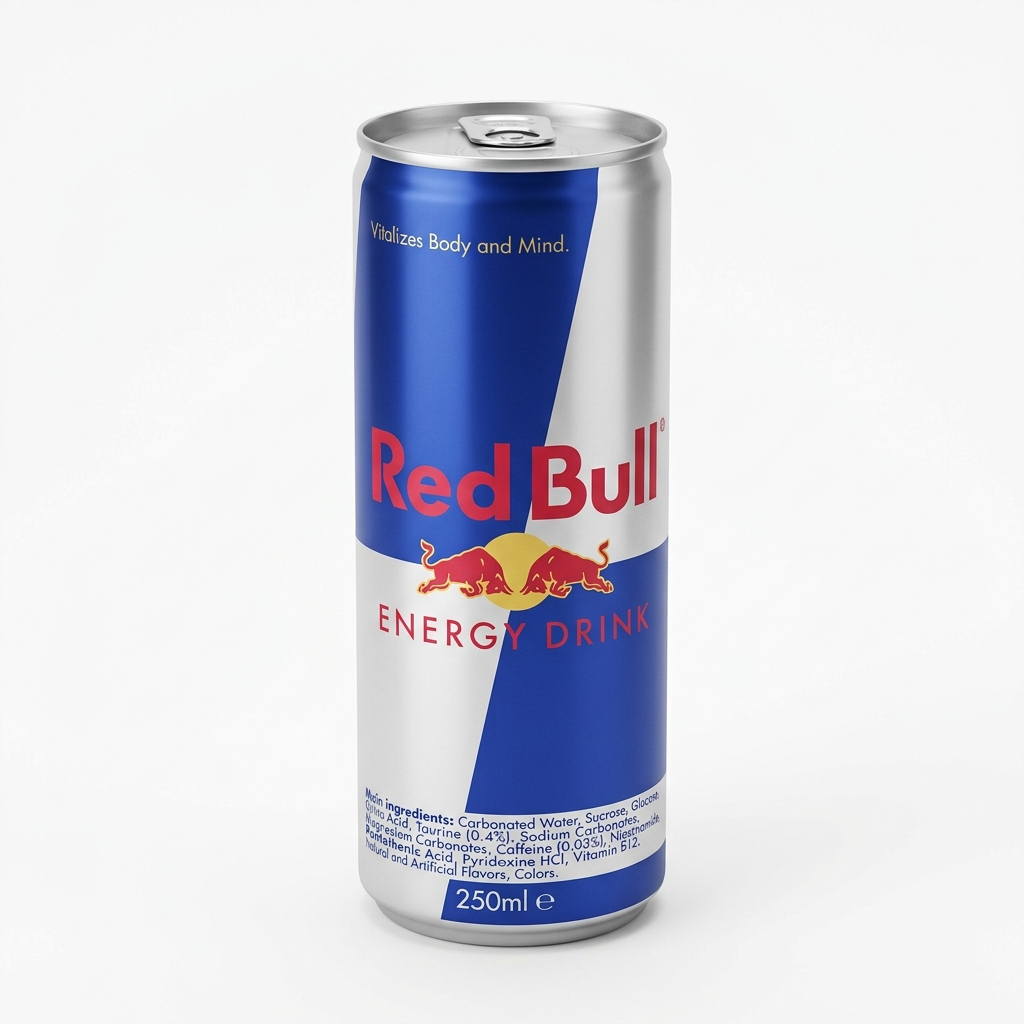
Red Bull Ingredients
What’s Inside Every Product
Red Bull is a functional energy beverage formulated to temporarily enhance mental alertness and physical performance. Its signature recipe combines carbonated water, simple sugars like sucrose and glucose, the amino acid taurine, and caffeine. Together with essential B-group vitamins—including niacinamide, pantothenic acid, pyridoxine HCl, and vitamin B12—these ingredients create a carbonated, nutrient-fortified drink designed to support cellular energy metabolism and cognitive focus.
Although specific ingredients and formulations can vary slightly by country of distribution, the core active profile remains highly standardized. This profile page details the complete Red Bull ingredient list, specific ingredient functions, and the underlying formula structure. Additionally, it examines the product's notable characteristics, key safety considerations, and answers frequently asked questions for a comprehensive understanding of its composition.
Complete Ingredient List
Sucrose
Glucose
Citric Acid
Taurine
Sodium Carbonates
Magnesium Carbonates
Caffeine
Niacinamide
Pantothenic Acid
Pyridoxine HCl
Vitamin B12
Natural and Artificial Flavors
Colors
Note: Ingredients and formulations can vary slightly by country of distribution.
Quick Facts
| Brand | Red Bull |
| Category | Beverages |
| Product Type | Energy Drink |
| Known For | Boosting mental alertness and physical performance |
| Key Ingredient Groups | Caffeine, Taurine, B-Group Vitamins, Sugars |
| Primary Use | Functional energy beverage |
Ingredient Function Breakdown
| Ingredient | Function in the Product |
|---|---|
| Carbonated Water | Base liquid carrier and carbonation source |
| Sucrose | Carbohydrate sweetener and quick energy source |
| Glucose | Carbohydrate sweetener and quick energy source |
| Citric Acid | Acidulant for tart flavor and preservation |
| Taurine | Amino acid supporting metabolic processes |
| Sodium Carbonates | Acidity regulator to balance pH |
| Magnesium Carbonates | Acidity regulator and mineral source |
| Caffeine | Central nervous system stimulant for alertness |
| Niacinamide | Vitamin B3, assists in cellular energy metabolism |
| Pantothenic Acid | Vitamin B5, supports synthesis and metabolism |
| Pyridoxine HCl | Vitamin B6, supports brain and energy pathways |
| Vitamin B12 | Essential vitamin for nerve function and red blood cells |
| Natural and Artificial Flavors | Provides the signature Red Bull taste profile |
| Colors | Provides the characteristic golden hue |
Product Identity
| Brand | Red Bull |
| Manufacturer | Red Bull GmbH |
| Country of Origin | Austria |
| Introduced | 1987 |
| Contains Caffeine | Yes |
| Product Family | Red Bull Energy Drink |
Product Classification
| Market Category | Functional Beverage |
| Primary Function | Energy and alertness enhancement |
| Typical Format | Carbonated liquid in aluminum can |
| Consumer Segment | Adults, athletes, students, professionals |
| Comparable Product Group | Energy Drinks |
Product Background
Red Bull was founded by Austrian entrepreneur Dietrich Mateschitz in the mid-1980s, inspired by Krating Daeng, an energy drink developed in Thailand by Chaleo Yoovidhya. Mateschitz adapted the formula to suit Western consumer preferences and officially launched Red Bull in Austria in 1987, effectively pioneering the modern energy drink category. This launch established an entirely new beverage segment, transforming a localized functional drink into a global phenomenon. The brand is managed by Red Bull GmbH, headquartered in Fuschl am See, Austria, which oversees the product's worldwide distribution and brand assets.
Over the decades, Red Bull has evolved into a dominant market leader, maintaining the highest market share of any energy drink in the world. The brand is globally recognized for its distinctive blue-and-silver slim can and its highly successful marketing campaigns, which focus on extreme sports, aviation, esports, and professional sports ownership, such as its prominent Formula One racing teams. Today, the beverage is distributed in over 170 countries, serving as a benchmark for the functional beverage industry and a widely utilized resource for consumers, professionals, and athletes seeking to enhance mental alertness and physical performance.
Product Overview
Red Bull is a pioneering functional beverage that established the modern energy drink category on a global scale. As a dominant market leader, it is primarily packaged in its signature slim aluminum cans, which are widely distributed in various standardized volumes to meet diverse consumer preferences. The product line has expanded from its classic formulation to include sugar-free variations and specialized flavor editions, maintaining a ubiquitous presence in the global beverage industry and serving as a key benchmark for market researchers and retail distributors.
The beverage is typically consumed to support mental alertness, focus, and physical endurance during periods of fatigue or demanding activity. It is commonly encountered in a wide array of environments, including convenience stores, supermarkets, fitness centers, workplaces, and nightlife venues, where it is frequently utilized as a standalone beverage or a mixer. Its primary consumer demographic includes students, professionals, athletes, shift workers, and travelers, making it a highly accessible functional tool in both everyday productivity and recreational contexts.
Formula Analysis
The formulation of Red Bull relies on carbonated water as its primary liquid carrier, which provides the characteristic effervescent mouthfeel and aids in the rapid dispersion of active components. The sweetening system utilizes a combination of sucrose and glucose, two simple carbohydrates that serve a dual purpose: they deliver immediate caloric energy and define the beverage's sweetness profile. To balance this sweetness and establish a specific tart flavor profile, the formula incorporates citric acid as an acidulant. This acidity is precisely regulated by sodium carbonates and magnesium carbonates, which act as buffering agents to stabilize the pH, ensuring product consistency and protecting the integrity of other active ingredients.
The functional core of the beverage is engineered around a synergistic system of stimulants, amino acids, and micronutrients. Caffeine acts as the primary central nervous system stimulant to enhance alertness, while taurine, an amino acid, is included to support metabolic processes. This stimulant system is paired with a water-soluble B-vitamin complex consisting of niacinamide (B3), pantothenic acid (B5), pyridoxine HCl (B6), and vitamin B12. These vitamins act as essential cofactors in cellular energy pathways, facilitating the conversion of the sucrose and glucose into usable physiological energy, thereby completing the functional logic of the formulation.
Sensory and stability characteristics are maintained through a precise combination of natural and artificial flavors alongside specific coloring agents. The flavoring system produces the brand's distinct, recognizable taste profile, while the added colors yield its characteristic golden hue. From a processing and preservation standpoint, the combination of carbonation, low pH from citric acid, and airtight packaging ensures microbiological stability without the need for traditional chemical preservatives. This integrated system of base, sweeteners, buffers, active compounds, and sensory stabilizers results in a highly stable, uniform liquid matrix suitable for global distribution.
How the Formula Works
| Formula System | Purpose |
|---|---|
| Energy & Stimulant System | Combines caffeine and taurine to enhance alertness and physical performance. |
| Carbohydrate Energy System | Uses sucrose and glucose to deliver rapid, easily digestible energy. |
| B-Vitamin Complex | Supports cellular energy metabolism and reduces fatigue. |
| Acid-Base Buffering System | Uses citric acid, sodium carbonates, and magnesium carbonates to maintain taste stability and pH. |
Ingredient Importance Ranking
| Ingredient | Relative Role | Why It Matters |
|---|---|---|
| Caffeine | Primary | The key active stimulant responsible for the primary functional effect of alertness. |
| Taurine | Major | An abundant amino acid included for its synergistic role with caffeine. |
| Sucrose & Glucose | Major | Provides the caloric energy and sweetness profile of the original formula. |
| B-Group Vitamins | Supporting | Micronutrients that assist the body in converting food into usable energy. |
| Carbonated Water | Functional | The carrier liquid providing hydration and effervescence. |
| Citric Acid & Carbonates | Functional | Regulates pH, taste profile, and shelf stability. |
| Flavors & Colors | Trace | Provides the signature sensory profile and golden appearance. |
Key Ingredient Spotlight
Caffeine
Acts as a central nervous system stimulant to temporarily increase mental alertness and reduce fatigue, serving as the primary functional component of the beverage.
Taurine
An amino acid that occurs naturally in the human body, added to support metabolic processes and complement the drink's active ingredient blend.
Sucrose and Glucose
These simple carbohydrates function as the primary sweetening agents and provide a rapid source of caloric energy.
Niacinamide (Vitamin B3)
An essential B-group vitamin that assists in cellular energy metabolism, helping the body convert nutrients into usable energy.
Flavor, Aroma & Sensory Profile
Flavor Profile
Sweet and tart with a distinctive medicinal undertone, characterized by notes of citrus, berry, and a sharp acidic finish.
Aroma Profile
Pungent and sweet, featuring artificial fruit, citrus, and slightly medicinal notes.
Texture & Sensory Experience
Light-bodied, highly carbonated, and effervescent liquid that delivers a crisp, tingling mouthfeel with a lingering sweet aftertaste.
Uses & Consumer Experience
Red Bull is primarily consumed as a functional beverage to enhance mental alertness, concentration, and physical performance during periods of high exertion or fatigue. Consumers frequently utilize the beverage during long-distance driving, intense study sessions, demanding professional shifts, and athletic training. The primary consumer expectation is a rapid, temporary increase in vitality and cognitive focus. To facilitate convenient, on-the-go consumption, the product is packaged in distinctive, slim aluminum cans of various volumes and is universally expected to be served chilled.
In commercial and retail landscapes, the beverage is a staple inventory item across convenience stores, supermarkets, gas stations, and automated vending machines, typically positioned in high-visibility refrigerated displays. Within the hospitality and food-service sectors, it is widely integrated into bars, nightclubs, and restaurants, where it serves as both a standalone refreshment and a key mixer for a variety of alcoholic and non-alcoholic beverages. Its presence also extends to corporate workplaces, fitness centers, and competitive gaming venues, highlighting its versatility across professional, recreational, and social environments.
Notable Characteristics
Considerations
Safety & Regulatory Notes
Frequently Asked Questions
What are the main ingredients in Red Bull?
The primary ingredients in Red Bull are carbonated water, sucrose, glucose, citric acid, taurine, sodium carbonates, magnesium carbonates, caffeine, B-group vitamins, natural and artificial flavors, and colors.
Which B-group vitamins are in Red Bull and what are their functions?
Red Bull contains niacinamide (B3), pantothenic acid (B5), pyridoxine HCl (B6), and Vitamin B12. These vitamins assist in cellular energy metabolism, synthesis, brain pathways, and nerve function.
What ingredients give Red Bull its taste and color?
Natural and artificial flavors provide the signature Red Bull taste profile, while added colors give the beverage its characteristic golden hue.
What is the function of taurine in Red Bull?
Taurine is an amino acid that supports various metabolic processes in the body.
Why does Red Bull contain sodium carbonates and magnesium carbonates?
These ingredients function as acidity regulators to balance the pH of the beverage, while magnesium carbonate also serves as a mineral source.
What is the role of caffeine in Red Bull?
Caffeine acts as a central nervous system stimulant, helping to boost mental alertness and physical performance.
Which brand produces Red Bull?
Red Bull is produced and owned by the Austrian company Red Bull GmbH, which distributes the functional energy beverage worldwide.
Do Red Bull ingredients vary by region?
Yes, the ingredients and formulations of Red Bull can vary slightly depending on the country of distribution.
What types of sugars are used to sweeten Red Bull?
Red Bull is sweetened with sucrose and glucose, which are carbohydrates that serve as quick energy sources.
References
- Red Bull Official Website (redbull.com)
- Red Bull Energy Drink Product Label and Packaging
- European Food Safety Authority (EFSA) Scientific Opinions on Caffeine and Taurine
Disclaimer
This Ingredientpedia page is for educational and reference purposes only. It does not provide medical, nutritional, legal, or regulatory advice. Product formulas, labels, and ingredients may change, so readers should always check the current product label and official manufacturer information.

Leave A Comment